
Faculty Associates
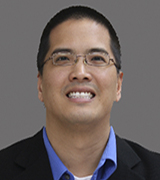 Chris Alcantara
Professor, Department of Political Science
Dr. Alcantara’s research examines the roots of collective action and intergovernmental cooperation in Canada, especially between Indigenous communities and the other three levels government (e.g. federal, provincial/territorial and municipal). He also writes about the importance of institutional design and the dynamics of institutional change using a variety of, conceptual, and methodological approaches. Visit faculty page
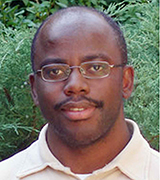
Godwin Arku
Associate Professor, Department of Geography
Dr. Arku’s research broadly revolves around the local impacts and community responses to global economic, social, and political change. Specifically, his research examines transnationalism and immigrant housing experiences, impacts of economic liberalization on housing markets, local impacts and policy responses to plant closures, municipal economic development policies, and economic reforms and built environment changes. Dr. Arku was Associate Director of the Centre from 2017 to 2025. Visit faculty page
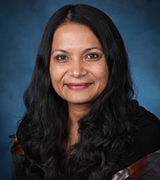 Bipasha Baruah
Professor and Canada Research Chair in Global Women’s IssuesDepartments of Geography and Anthropology, Rotman Institute of Philosophy
Dr. Baruah conducts interdisciplinary research on gender, development and globalization; gender and global governance; women and work; and social, political and economic inequality. Her research on women and property ownership and women’s employment in renewable energy and resource efficiency has influenced policy within governments, financial institutions and non-governmental organizations. Dr. Baruah has 12 years of professional experience with organizations such as the United Nations Development Program, Asian Development Bank, World Resources Institute, The Energy and Resources Institute, Self-Employed Women’s Association, the Association for Women’s Rights in Development, the International Development Research Centre of Canada, Natural Resources Canada, and Global Affairs Canada. Visit faculty page
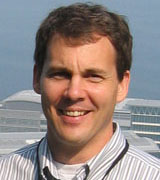 Jamie Baxter
Associate Dean Graduate Affairs (Social Science)Professor, Department of Geography
Dr. Baxter is a social scientist interested in a variety of topics including: environmental risks from hazards, community responses to technological hazards, environmental inequities, environment and health, geography of health, noxious facility siting, and methodology. Visit faculty page
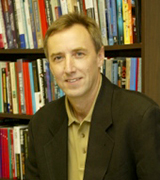 Neil Bradford
Professor and Chair, Department of Political Science, Huron University College
Member, Ontario Highly Skilled Workforce Planning and Partnership Table
Dr. Bradford’s research interests focus on place-based policy and multi-level governance and he has published widely in the areas of urban and community development, inter-governmental relations, and partnerships that address economic innovation and social inclusion goals. Visit faculty page
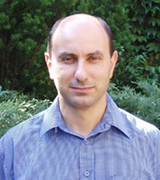 Michael Buzzelli
Associate Professor, Department of Geography
After completing graduate work at McMaster University in 2001, Dr. Buzzelli held academic appointments at UBC and Queen’s and has been a visiting scholar at the University of Melbourne, University of Glasgow, UBC and Universita di Bologna. He has led several national and international research projects on a range of urban issues as well as graduate policy training and consulting work across Canada. From 2018-21, he was appointed Western Teaching Fellow (Social Science) and developed a project on town-gown relations and experiential learning. In London, he has served on the Board of Directors of the London and Middlesex Community Housing, the largest social housing provider in the region (Member 2014-17, Chair, 2017-18). Since 2019 he has served on the City of London’s Diversity, Inclusion and Anti-oppression Advisory Committee (DIAAC). Dr. Buzelli was Director of the Centre from 2021 to 2025. Visit faculty page
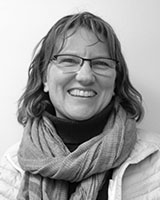 Stephanie Frisbee
Assistant Professor, Department of Pathology and Laboratory Medicine, Schulich School of Medicine and DentistryDr. Frisbee’s research focuses on the factors that affect cardiovascular health in entire communities or populations, not just individuals. She evaluates the impact of factors such as community resources, health care resources, how communities are structured, environmental factors and exposures, and policies that affect the communities in which people live. Visit faculty page
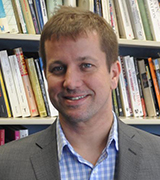 Jason Gilliland
Professor, Department of Geography
Director, Urban Development Program
Cross Appointment with School of Health Studies and the Department of Paediatrics
Dr. Gilliland’s research focuses on various aspects of urban planning and development, urban design, housing, transportation, children's environments, and public health in Canadian cities. His work utilizes both qualitative and quantitative methodologies and he has a particular interest in advancing urban and health applications of geographic information systems (GIS). Visit faculty page
 Kate Graham
Dr. Kate Graham has more than a decade of experience working in local government, most recently as the Director, Community & Economic Innovation at the City of London. She is an engaged community member and volunteer, including serving as the Chair of the Pillar Nonprofit Network, and was named one of London’s Top 20 Under 40 in 2015. Her research interests include local government, urban politics, public policy and city competitiveness. Her dissertation Leading Canada’s Cities? A Study of Urban Mayors examined the political leadership of Canada’s cities (see: MayorsProject). She is an adjunct faculty member in Western's Local Government Program.
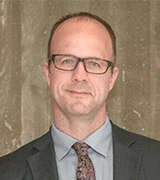 Michael Haan
Associate Professor, Department of Sociology
Canada Research Chair in Mitigation and Ethnic Relations
Co-director, Statistics Canada Research Data Centre at Western
Dr. Haan’s research interests intersect the areas of demography, immigrant settlement, labour marker integration, and data development. He is widely consulted by provincial and federal governments for policy advice, and currently has signed Research Partnership Agreements with Citizenship and Immigration Canada, Employment and Skills Development Canada, and Statistics Canada. Visit faculty page
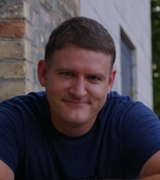 Jesse Helmer
Assistant Professor, Governance, Leadership and Ethics and Management and Organizational Studies at Huron University College
Jesse Helmer is a PhD candidate in Political Science at Western University, where his dissertation focuses on the political participation gap between homeowners and tenants in urban politics. He teaches part-time at Western in the local government program and is Assistant Professor in Governance, Leadership and Ethics and Management and Organizational Studies at Huron University and a Senior Research Associate at the Missing Middle Initiative.
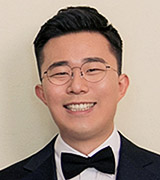 JinHyung Lee
Assistant Prodessor, Department of Geography and Environment
Dr. Lee's research interests concern using GIScience, GeoAI, geospatial data computing, and space-time analytics to study urban transportation as well as issues and challenges within cities from a data-driven perspective. He is also interested in urban analytics with foci on the relationship between transport and public health, urban development, and business applications. Visit faculty page
 Agnieszka Leszczynski
Associate Prodessor, Department of Geography and Environment
Dr. Leszczynski’s work examines the intersections of digitally and cities from a variety of perspectives. These include the geographies of urban platformization, urban platform aesthetics, and how small cities function as sites of experimentation with digital urban innovation. Visit faculty page
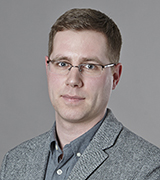
Joe Lyons
Assistant Professor, Department of Political Science
Director, Local Government Program
Dr. Lyons’ research interests are in the areas of local government institutions and management. He is especially interested in special-purpose bodies and has published research comparing their performance with general-purpose governments. Visit faculty page
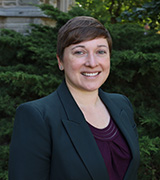
Lora Phillips
Assistant Professor, Department of Sociology
Lora Phillips is a sociologist whose research seeks to answer three broad questions: Who has access to a stable life, and who does not? Why do observed social class, age, and racial-ethnic differences in exposure to precarious circumstances exist, particularly as it relates to the role of spatial and temporal context? And what are the consequences of exposure to material precarity, and inequalities therein, for individual and community health and well-being? Using mixed methods, interdisciplinary, and community-engaged approaches, Lora has specifically studied spatial, temporal, and socio-demographic inequalities in exposure to economic insecurity; job loss and precarious work; foreclosure, eviction, and homelessness; and food insecurity. Visit faculty page
 Adriana Premat
Assistant Professor, Department of AnthropologyDr. Premat is a social anthropologist, researching the environment, agriculture and food consumption as these intersect with poverty and sustainable development in urban settings. Along with a focus on contemporary urban agriculture initiatives taking place in Latin American and Canadian cities, she explores the ongoing redefinition of state-civil society relations, restructuring of the food system, repackaging corporate interests and the spread of environmental sensibilities in and across socialist and capitalist contexts. Visit faculty page
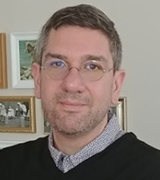 Howard Ramos
Professor, Department of Sociology
Howard Ramos is a political sociologist who investigates issues of social justice and equity. He has published on social movements, human rights, Indigenous mobilization, environmental advocacy, ethnicity, race, and Atlantic Canada. He is currently working on projects looking at Atlantic Canadian, secondary cities, integration of immigrants and refugees, hockey and multiculturalism, and the social implication of AI and new technology. He works with graduate students looking at these issues as well as state funding of women’s organizations, public attitudes and social values, perceptions of skills needed in the digital economy, and the intersections of identities and sports. Visit faculty page
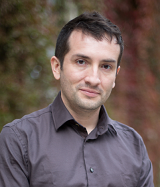 Gus Riveros
Associate Professor, Faculty of Education
Dr. Riveros’ research examines the relationships between urban change and schooling. In particular, the factors that affect the availability of educational opportunity in urban centres. His most recent work investigates the processes that contribute to enrolment pressure in schools, including overcrowding and underutilization. Visit faculty page
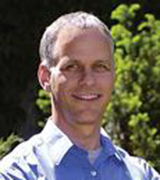 James Voogt
Associate Professor and Chair, Department of GeographyMember, Environment and Sustainability Collaborative Graduate Program
President of the International Association for Urban Climate
Dr. Voogt’s broad area of research interest is urban climatology, with a specialization in the measurement and modelling of urban surface temperatures. He is former Chair of the American Meteorological Society’s Board of the Urban Environment, has served as an expert contributor to the United States Environmental Protection Agency’s Reducing Urban Heat Islands: Compendium of Strategies, and was an invited participant in sessions related to urban climate and meteorology at both UN Habitat III and the Cities IPCC conference. Visit faculty page